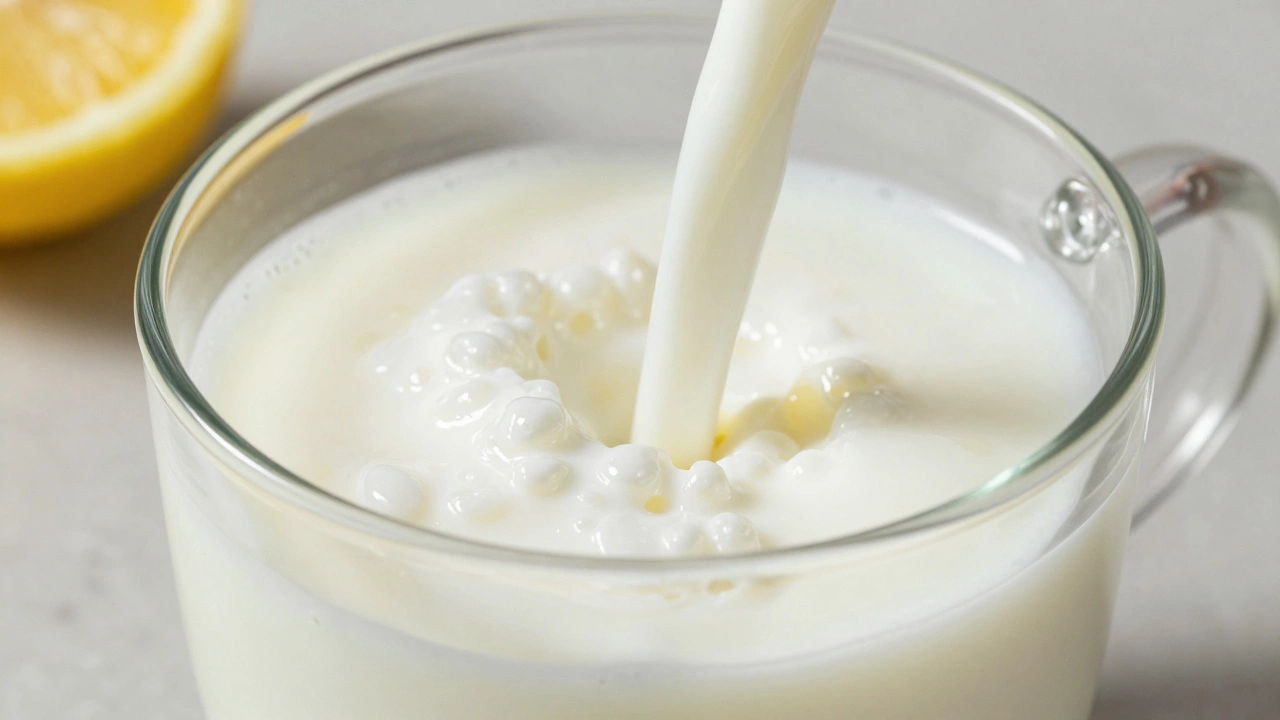
Citrus & Dairy Interaction Simulator
Simulate the Reaction
Have you ever poured a squeeze of lemon into your morning coffee with milk, only to watch it turn into an unappetizing, lumpy mess? Or perhaps you’ve tried to make a creamy dressing with lime juice and ended up with something that looks like cottage cheese gone wrong. It’s frustrating, isn’t it? But here is the twist: sometimes, this reaction is exactly what you want. In fact, if you are looking to make homemade paneer, forcing milk to curdle with citrus is the entire point.
The conflict between citrus and dairy isn’t about safety or poison. It’s about chemistry. Specifically, it’s about pH levels and protein structures. Understanding why they fight each other helps you control whether you get a smooth sauce or a fresh block of cheese. Let’s break down what happens in that glass or pot when acid meets milk.
The Chemistry of Milk: More Than Just Liquid
To understand why citrus breaks dairy, we first need to look at what milk actually is. Milk is not just water with some fat floating around. It is a complex emulsion containing water, fats, lactose (sugar), minerals, and proteins. The most important players here are the proteins, specifically casein.
Casein makes up about 80% of the protein in cow’s milk. These proteins don’t float freely; they clump together into tiny spheres called micelles. Think of these micelles as microscopic balls covered in a protective layer. This layer has a negative electrical charge. Because like charges repel, these micelles push away from each other, staying suspended evenly throughout the liquid. This keeps milk smooth and white.
When you add nothing but heat or time, these micelles stay stable. That’s why warm milk tastes smooth. However, introduce an acid, and the balance shifts dramatically.
The Role of Acid: Stripping the Protection
Citrus fruits like lemons, limes, oranges, and even vinegar contain acids. Lemon juice, for example, contains citric acid. When you mix this acid into milk, the hydrogen ions from the acid attack the protective negative charge on the casein micelles.
Essentially, the acid neutralizes the charge. Once that protective shield is gone, the repulsive force disappears. The casein micelles start sticking to each other. They clump together rapidly, forming larger and larger networks. This process is called coagulation. The solid parts that form are called curds, and the remaining liquid is called whey.
This is why mixing orange juice and milk results in a chunky texture. The acid has stripped the proteins of their ability to stay apart. It’s not dangerous, but it ruins the mouthfeel of a drink or a sauce that relies on creaminess.
Temperature Matters: Hot vs. Cold Reactions
You might notice that cold milk doesn’t curdle as instantly as hot milk when you add lemon. Temperature plays a huge role in how fast and how thoroughly this reaction happens.
- Cold Milk: The proteins are tighter, and the acid needs more time to penetrate and neutralize the charges. You might see separation after a few minutes, but it often remains somewhat fluid.
- Hot Milk: Heat agitates the molecules. When milk is near boiling (around 95°C or 203°F), the casein micelles are already unstable. Adding acid at this stage causes instant, complete coagulation. The curds separate cleanly from the whey.
This distinction is crucial for cooking. If you are making a creamy curry, you keep the temperature low and avoid acidic ingredients until the very end, or you temper them. If you are making cheese, you bring the milk to a simmer to ensure a clean break.
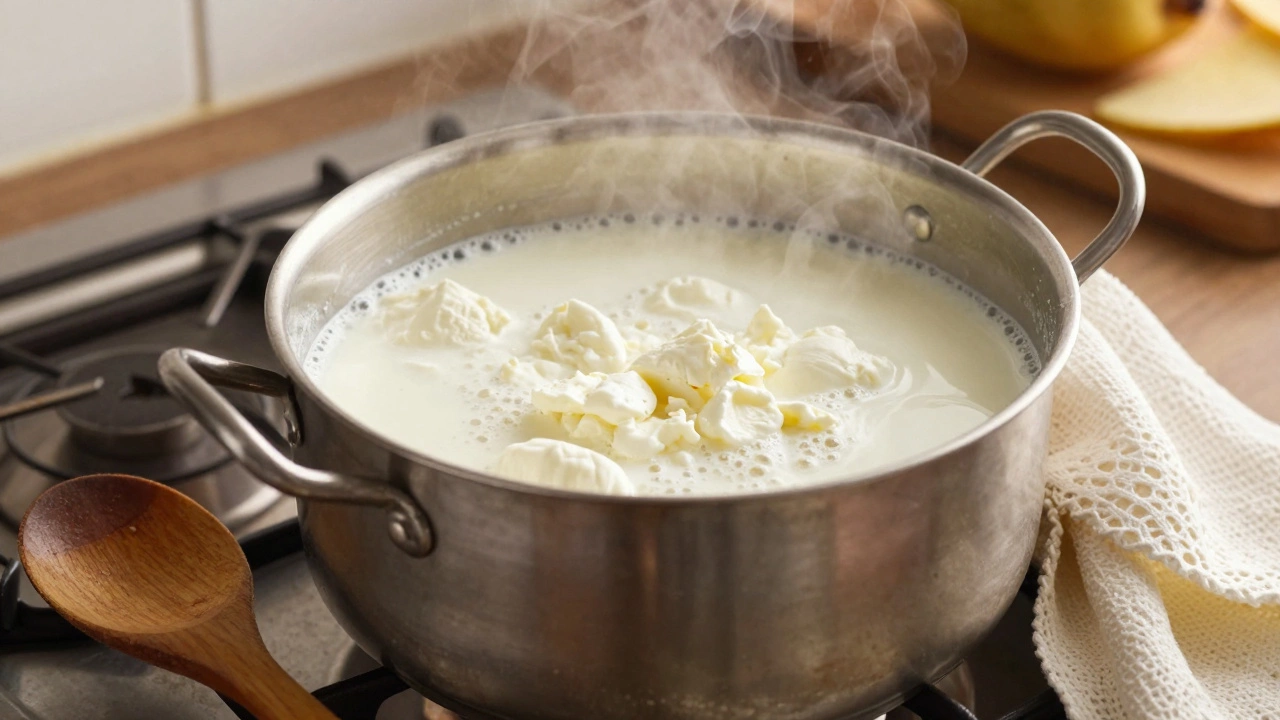
Turning a Problem into Paneer
In Indian cuisine, we don’t fear this reaction; we harness it. Making homemade paneer is essentially controlled curdling. Paneer is a fresh, non-aged cheese that requires no rennet (the enzyme used in cheddar or mozzarella). Instead, we use acid.
Here is how the process works logically:
- Boil the Milk: You take full-fat milk and bring it to a rolling boil. High fat content ensures the paneer is soft and rich, not dry and crumbly.
- Add the Acid: You remove the milk from heat and add lemon juice, vinegar, or citric acid. The standard ratio is about one tablespoon of acid per cup of milk, but you adjust based on the milk’s natural acidity.
- Watch the Separation: Within seconds, you’ll see the white solids (curds) separating from the translucent yellowish liquid (whey). This visual cue tells you the reaction is working.
- Strain and Press: You strain the curds through a cheesecloth and press them under weight. This removes excess moisture and binds the curds into a solid block.
If you were to skip the heat step, your paneer would be grainy and weak. If you added too little acid, it would remain rubbery. The goal is a clean break where the whey runs clear, indicating all the casein has precipitated out.
Common Mistakes in Mixing Citrus and Dairy
Even experienced cooks make mistakes when dealing with acid-sensitive dairy. Here are the most common pitfalls and how to avoid them.
| Mistake | Result | Fix |
|---|---|---|
| Adding lemon directly to cold cream | Lumpy, broken sauce | Temper the acid by mixing it with a bit of warm liquid first, then slowly whisk into the cream. |
| Using skim milk for paneer | Dry, crumbly cheese | Always use full-fat (whole) milk for binding and texture. |
| Boiling milk after adding acid | Rubbery, tough curds | Remove from heat before adding acid, or keep temperature very low. |
| Not pressing paneer enough | Soggy, falls apart in curry | Press for at least 1-2 hours with a heavy weight. |
One specific tip for sauces: if you must combine dairy and citrus, create a buffer. Stir a teaspoon of cornstarch or flour into the dairy before heating. The starch coats the proteins and provides a physical barrier against the acid, preventing immediate curdling. This is why many restaurant-style creamy lemon sauces stay smooth while home versions break.

Alternatives to Citrus for Acidification
While lemon and lime are popular, they aren’t the only acids that affect dairy. Different acids have different strengths and flavor profiles.
- Vinegar: White distilled vinegar is sharp and neutral in flavor, making it great for paneer if you don’t want a fruity note. Apple cider vinegar adds a subtle sweetness.
- Citric Acid Powder: This is pure acid without the water content of juice. It gives you precise control over the pH level. Many professional chefs prefer this for consistent paneer results.
- Yogurt: Yogurt contains lactic acid. It’s milder than citrus. This is why yogurt-based marinades tenderize meat without curdling instantly unless heated aggressively.
Each option changes the final taste slightly. Lemon adds brightness, vinegar adds tang, and citric acid is purely functional. Choose based on the dish you are preparing.
Does This Apply to All Dairy?
Not exactly. The reaction depends on the type of dairy product. Fresh milk and cream are highly susceptible because the casein is intact. Processed dairy products behave differently.
Cheese that has been aged, like cheddar, has already undergone coagulation and aging. The proteins have changed structure, so adding lemon won’t cause it to curdle further-it will just melt or soften. Butter is mostly fat with very little protein, so it generally resists curdling unless you burn it or add massive amounts of acid.
Plant-based milks, such as almond or soy milk, also react to acid, but the proteins involved are different. Soy milk can curdle similarly to cow’s milk, which is why tofu (made from soy curds) follows a similar logic to paneer. Almond milk, however, has very low protein content, so it may separate into oil and water rather than forming distinct curds.
Practical Tips for Your Kitchen
Knowing the science allows you to cook with confidence. Here are three rules to keep in mind:
- If you want smoothness, delay the acid. Add citrus juices at the very end of cooking, off the heat, and stir vigorously.
- If you want cheese, use heat and whole milk. Ensure the milk is near boiling and use full-fat varieties for the best texture.
- Test small batches. If you are experimenting with a new recipe, mix a spoonful of your dairy base with a drop of acid in a separate bowl. Wait thirty seconds. If it holds, proceed. If it breaks, adjust your technique.
Next time you reach for the lemon squeezer, think about what’s in the pot. Are you trying to preserve the silkiness of a sauce, or are you ready to transform that milk into a versatile block of paneer for your next curry? The choice is yours, and now you know exactly how to make it work.
Is it safe to eat curdled milk caused by lemon juice?
Yes, it is perfectly safe. The curdling is a chemical reaction between acid and protein, not a sign of spoilage. As long as the milk was fresh before you added the acid, the resulting curds are edible. This is the basis for making fresh cheeses like paneer and ricotta.
Can I fix a sauce that has curdled from too much lemon?
It is difficult to reverse the process completely. However, you can blend the sauce with an immersion blender to break up the large curds into smaller particles, creating a thicker, albeit textured, consistency. Alternatively, start a new batch of cream and slowly whisk in the broken sauce to dilute the acid concentration.
Why does my homemade paneer taste sour?
A slight tang is normal due to the acid used, but a strong sour taste usually means you used too much lemon juice or vinegar. Rinse the curds thoroughly with cold water after straining them to wash away excess acid. Using citric acid powder can also help control the flavor better than juice.
Does orange juice curdle milk faster than lemon juice?
Lemon juice is generally more acidic (lower pH) than orange juice, so it tends to curdle milk faster and more completely. Orange juice has a higher sugar content and lower acidity, which can slow down the coagulation process, potentially resulting in a softer, less defined curd.
Can I use plant-based milk to make paneer?
Traditional paneer requires casein protein found in animal milk. Plant milks lack casein, so they cannot form true paneer. However, you can make tofu-like blocks from soy milk using calcium sulfate or nigari. Other plant milks like almond or oat do not have enough protein to coagulate into a solid cheese form.